A trusted traveler carrying over a million dollars in cocaine through America’s busiest border crossing reveals how vulnerable our expedited screening programs really are.
Story Snapshot
- CBP officers arrested a 25-year-old U.S. citizen enrolled in the SENTRI trusted traveler program with 60.14 pounds of cocaine worth $1.1 million hidden in his Honda Civic’s doors at San Ysidro Port of Entry on April 7, 2026
- The seizure occurred during secondary inspection using non-intrusive imaging and canine detection, despite the suspect’s pre-approved low-risk status designed for expedited border crossings
- Border drug seizures have surged 27% above March 2024 levels, highlighting intensified cartel smuggling operations
- The incident exposes critical security gaps in programs meant to streamline legitimate cross-border travel while raising questions about vetting procedures
When Convenience Meets Corruption
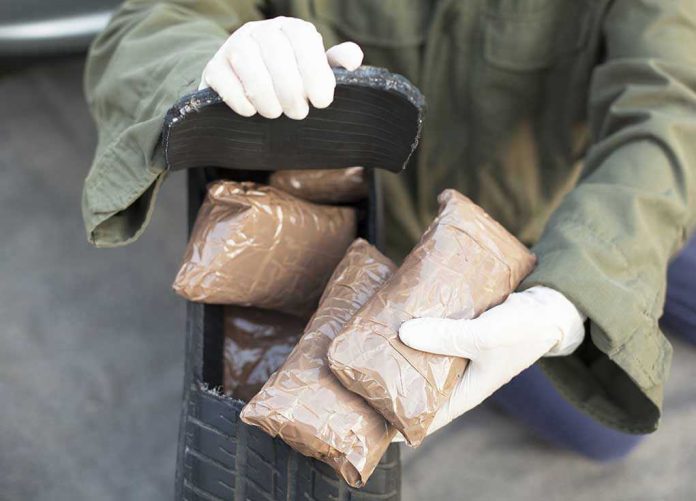
The SENTRI program exists for a simple reason: legitimate travelers crossing the U.S.-Mexico border thousands of times annually shouldn’t endure hours-long waits. Launched in 1995, the Secure Electronic Network for Travelers Rapid Inspection vets applicants through background checks, interviews, and fingerprinting before granting expedited lane access. The 25-year-old arrested in his 2020 Honda Civic passed all those hurdles. He held trusted status that should have signaled reliability. Instead, CBP officers discovered 20 packages containing 60.14 pounds of cocaine expertly concealed within his vehicle’s door panels. The street value exceeded $1.1 million.
This wasn’t amateur hour. The smuggler chose vehicle door concealment, a sophisticated method requiring disassembly and reconstruction that evades casual observation. Only advanced non-intrusive imaging technology and trained canine units detected the anomalies during secondary inspection at San Ysidro, the nation’s busiest land border crossing. The location matters tremendously. San Ysidro processes tens of thousands of vehicles daily, creating an environment where cartels calculate that volume provides cover. A SENTRI participant gambling on expedited processing betting officers would wave him through represents calculated exploitation of trust-based security systems designed for efficiency, not paranoia.
Detection Technology Versus Criminal Innovation
CBP’s success in this interdiction showcases how layered security compensates for program vulnerabilities. Officers didn’t rely solely on SENTRI credentials. They deployed imaging equipment that reveals density inconsistencies invisible to human eyes, allowing technicians to spot irregularities in door panel composition without damaging vehicles. Canine teams added biological detection capabilities machines cannot replicate. Dogs trained to identify cocaine’s chemical signature alerted handlers to substances sealed behind metal and upholstery. These combined methodologies caught what expedited processing alone would have missed, validating investments in detection infrastructure even as they expose how criminals probe every system weakness.
The seizure statistics tell a broader story. CBP reports that current drug interdictions run 27% higher than March 2024 totals, reflecting either enhanced enforcement effectiveness or escalating smuggling attempts, likely both. Cartels constantly adapt tactics, recruiting U.S. citizens whose passports and clean records provide advantages foreign nationals lack. This 25-year-old suspect possessed citizenship and trusted traveler status, two assets that should have ensured swift passage. That combination makes him extraordinarily valuable to trafficking organizations willing to pay premiums for operatives who lower detection risk. His arrest confirms that no credential guarantees immunity from scrutiny when behavior or technology flags inconsistencies.
The SENTRI Credibility Problem
Trusted traveler programs face an inherent paradox. They exist because thorough inspections of every border crosser would paralyze commerce and tourism, creating economic damage far exceeding security benefits. Yet every breach by a SENTRI participant undermines public confidence in vetting procedures and emboldens criminals to pursue enrollment specifically for smuggling access. The background checks require fingerprints, interviews, and records reviews, but they cannot predict future criminal recruitment. A clean 24-year-old applying for SENTRI presents no red flags. Six months later, facing financial pressure or cartel coercion, that same individual becomes a mule hauling cocaine north.
This creates policy dilemmas with no perfect solutions. Abandoning expedited programs means legitimate travelers suffer interminable delays that damage border economies dependent on fluid movement. Maintaining programs without enhanced monitoring invites exploitation. Increasing scrutiny of trusted travelers negates the efficiency justifying their existence. CBP walks this tightrope daily, balancing convenience against security in an environment where cartels invest millions analyzing vulnerabilities. The San Ysidro seizure suggests current protocols, while imperfect, still catch sophisticated attempts when officers apply secondary inspections judiciously. Whether that success rate satisfies public expectations depends on how many similar smugglers slip through undetected, a number impossible to calculate.
CBP Says It Seized More Than 60 Pounds Of Cocaine From US Citizen At Border https://t.co/BxbAQD2xfK
— zerohedge (@zerohedge) April 16, 2026
Federal prosecutors now handle charges for narcotics importation and smuggling against the unnamed suspect. His seized vehicle and cellphones will provide investigators evidence of cartel connections and communication patterns. The $1.1 million in cocaine removed from circulation represents a tactical win, though cartels view such losses as operational costs rather than strategic defeats. For border communities, each interdiction matters because every pound of cocaine seized represents potential addiction, overdose, and crime prevented. For security analysts, this case confirms that technology and training compensate somewhat for program vulnerabilities, but also that American citizens willing to betray trust for profit remain cartels’ most valuable assets in an endless chess match played along our southern border.
Sources:
CBP Says It Seized More Than 60 Pounds Of Cocaine From US Citizen At Border – ZeroHedge
CBP Says It Seizes More Than 60 Pounds of Cocaine From US Citizen at Border – The Epoch Times