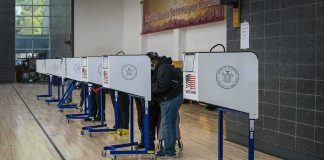
The integrity of jury service depends on a simple bargain: citizens judge the facts, and the system shields them from retaliation. When journalism turns its lens from the case to the juror as a target, that bargain frays—and so does public confidence that any of us could deliberate without fear.
The Short Version
- NBC10 Boston published an investigative piece surfacing sensitive personal-history allegations about the Lindsay Clancy holdout juror, drawn from court files and family interviews.
- Legally, U.S. press freedoms allow newsrooms to report truthful information lawfully obtained—even about jurors—especially after a trial concludes; ethically, the newsroom’s choices still carry foreseeable safety and fairness risks for private citizens.
- High-profile trials now routinely trigger “juror exposure” fights as digital records, social media, and competitive TV formats make it cheap to identify and frame jurors as story protagonists.
- The core policy tension is stable: transparency about the justice system versus protection of juror privacy to preserve candid deliberation and civic participation.
What NBC10 Boston did—and why it sparked backlash
After the Lindsay Clancy trial ended in a mistrial, NBC10 Boston aired and published exclusive interviews with jurors about deliberations and then advanced the story with an “Investigators” piece on the lone holdout juror. That second piece reported, in detail, allegations and pending matters drawn from court records and interviews with family members: domestic-violence allegations, an eviction filing, a restraining order, and a prior assault charge out of Brockton District Court. The station said it was not naming the juror but unmistakably positioned him as the identifiable holdout in a case already saturated with descriptive breadcrumbs from televised coverage and juror media appearances. The editorial move shifted public attention from evaluating the evidence against Clancy to evaluating the person who kept the panel from a unanimous insanity verdict—an attention pivot that critics labeled doxxing, regardless of whether a legal name appeared in the copy.
This is the nub: the reporting relied on public filings and interviews—classically legitimate newsgathering. Yet the chosen subject was a private citizen performing a compulsory civic duty in a polarizing case, and the details selected were those most likely to animate online outrage. Legality and news judgment are different inquiries. The former asks “may we?” The latter, “should we?”
The law draws a wide circle around press freedom; the ethics of juror exposure are narrower
American courts have consistently held that, absent exceptional circumstances, the press may publish truthful information it lawfully obtains from open records, including juror identities and addresses after service concludes. A federal appellate decision summarized the principle plainly: even where a judge keeps a jury anonymous during a trial, restraining publication of names independently acquired by journalists violates the First Amendment. In the District of Massachusetts, trial courts are expected to disclose juror names and home addresses post‑trial unless the court makes particularized findings of “exceptional circumstances,” such as a credible risk of harm or tampering. And state high courts, like New Jersey’s in Neulander, have invalidated prior restraints that would punish publication of juror information found in public records.
Those rules exist for reasons bigger than any one case. Open justice relies on public oversight of how juries are selected and function; blanket, perpetual secrecy creates its own democratic costs. But law-review literature and press‑freedom advocates also acknowledge a pragmatic caveat: anonymous juries became more common precisely because the modern information ecosystem makes targeted harassment easier, and because juror fear chills candid deliberation in the room we most need it.
Why this case sits at the fault line: from scrutiny to punishment
Post‑verdict reporting on juries has a pedigree. Journalists ask what arguments prevailed, whether instructions confused, and, yes, whether a juror’s qualifications mattered. The difficulty is proportionality. Reporting that a panel deadlocked because one juror misunderstood reasonable doubt, as alleged by interviewed jurors in this case, aims at the deliberative process. Excavating a holdout juror’s eviction file and domestic allegations aims at the person—inviting readers to infer bias or unfitness from life troubles only tenuously connected to voir dire and the trial record. The foreseeable downstream effect—targeted online outrage, contact at home, reputational damage to a nonpublic figure—looks less like oversight and more like punishment.
This is not a novel pathology; it is the pattern in every high‑salience trial of the social‑media era. Juror names are sealed for a time or redacted from dockets; then details leak through social posts, televised description, or pieced‑together public records. Coverage reframes the juror as a protagonist. Commentators, influencers, and partisans mobilize to shame or lionize a private citizen for their vote, with YouTube compilations and TikTok reels turning civic duty into content. The statutes and court orders designed to protect jurors were built for a world of morning papers, not viral micro-targeting.
The newsroom’s public‑interest test: a practical framework
Because the law grants latitude, the burden shifts to editors to set a higher bar. A defensible public‑interest test for reporting on jurors should ask: Is the information directly tied to a fact in the court record, a voir dire disclosure, or an adjudicated disqualification? Is there a systemic story—say, a failure of juror screening procedures—that cannot be told without these particulars? Have we minimized the chance of identification while still informing the public about process? Would the same details be published if the juror’s vote aligned with the majority? And will publication predictably expose the person to harassment that outweighs any incremental public understanding we deliver?
Applied here, the test is not kind to the “Investigators” piece. The article’s centerpiece claims—domestic-violence allegations, a restraining order, an eviction—reside in public files, but the through-line to deliberative competence or actual bias, as examined during voir dire, was not established in the record presented to readers. That gap leaves the impression of motive‑hunting post hoc rather than illumination of process.
What courts and policymakers can do without muzzling the press
First, trial judges already have tools. They can: empanel anonymous juries in truly exceptional cases, with articulated findings; stage the post‑verdict release of juror lists (for example, names but not addresses, or delayed disclosure) to reduce the temperature of the immediate aftermath; and deliver clear, on‑record guidance to media and parties on permissible contact with jurors after discharge, backed by swift enforcement against intimidation—not reporting. Second, courts can modernize juror‑privacy practices in their own files: limit the routine inclusion of granular personally identifying information (PII) in easily harvested public documents without impairing transparency about the process itself.
Third, newsrooms should adopt and publish juror‑exposure standards akin to widely used policies on sexual‑assault anonymity and suicide coverage. These should cover timing (cooling‑off periods), relevance thresholds for background reporting, redaction norms that truly prevent identification in a digital context, and internal harm assessments when stories involve nonpublic figures performing compelled civic roles. None of this impinges on the right to write; it disciplines how to exercise that right in a way that preserves the jury system we all rely on.
DeSantis offers Lindsay Clancy holdout juror 'asylum' in Florida after media sinks to a 'new low' https://t.co/wwTqEqojeL via https://t.co/ctTwKbCFJ5
— Amanda (@Joyenz1) September 13, 2026
The bottom line for readers asked to serve
Jury duty only works if ordinary people believe they can deliberate on the evidence, cast an honest vote, and return to their lives without being turned into the story. The law lets journalists publish a great deal about jurors; it does not require them to publish everything they can find. In the Clancy case, NBC10 Boston’s sourcing was standard, but its editorial choice—to assemble and broadcast an accusatory dossier about a holdout juror—crossed from scrutiny into personalization with foreseeable collateral damage. If we want juries that are candid and unafraid, press freedom and juror privacy cannot be treated as a zero‑sum game. Newsrooms and courts alike have levers to keep both values intact. It’s time to use them.
Sources:
pjmedia.com, nbcboston.com, instagram.com, rcfp.org, scholarship.law.vanderbilt.edu, wired.com