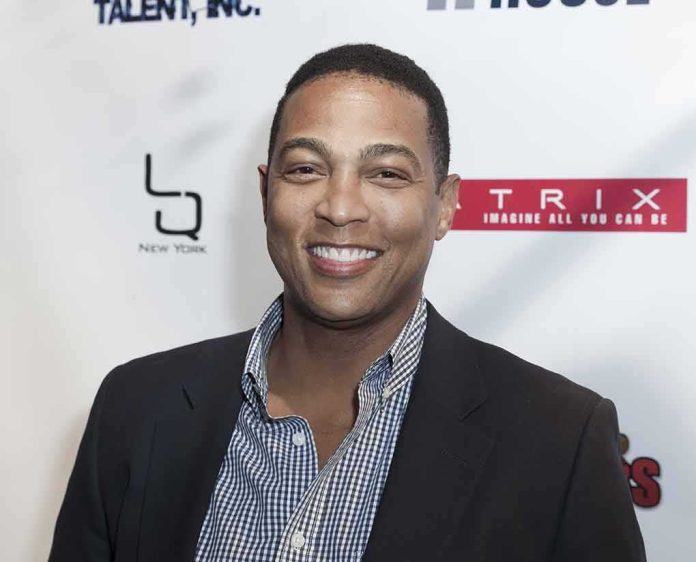
The fight over whether to “make room for MAGA” at a major newsroom is not just a personality dispute; it distills a structural tension in American cable news between broadening audience appeal and upholding a hard line on empiricism when one faction rejects shared facts.
At a Glance
- Don Lemon has consistently argued that CNN leadership under Chris Licht sought a more centrist posture that meant giving greater exposure to right-wing voices; he opposed putting election deniers and bigots on equal footing with fact-based guests.
- Lemon ties his 2023 ouster to that editorial clash, framing platforming choices as a test of journalistic duty rather than ratings strategy.
- Public record confirms Lemon was terminated in April 2023, but there is no internal CNN directive available that proves management ordered a rightward shift.
- Licht publicly rejected the label “centrist,” framing his aim as bold, engaging journalism unconstrained by left-right binaries.
What Lemon actually argued — and why it matters
After his firing, Don Lemon did not simply lament a lost job; he articulated a principle: a news organization should not put “liars and bigots and insurrectionists and election deniers” on the same footing as sources who operate from verifiable fact. He cast CNN’s leadership at the time — specifically under Chris Licht — as moving the network toward the center, paired with an increase in platforming right-wing politicians. In Lemon’s view, that blend blurred a bright-line standard and risked confusing impartiality with indulgence of disinformation. Multiple outlets captured him making that case publicly; he said equal-footing platforming of election denial would be a dereliction of duty, and he linked that refusal to his exit from the network.
Lemon’s subsequent commentary has been even blunter: courting MAGA viewers by tacking right, he argues, is futile because a hardened segment will not reward fact-based coverage with loyalty. His contention is strategic as well as ethical — that attempts to win over anti-press partisans by adjusting guest mix or tone misunderstand audience psychology and brand identity in news.
What is documented — and what is not
Two facts are not in dispute. First, CNN did terminate Lemon in April 2023, ending a 17-year run and closing a turbulent chapter that included an on-air controversy about Nikki Haley and reports of workplace friction; the termination was confirmed by the network and major outlets the day it happened. Second, Lemon publicly and repeatedly characterized CNN’s editorial strategy under Licht as a move to the center that increased platforming of right-wing politicians; that is Lemon’s stated belief, on the record, not an inference attributed to unnamed sources.
Where the evidentiary record is thin is inside the building. There is no surfaced internal directive — no memo, strategy deck, or standards update — instructing staff to tilt right, to chase MAGA viewers, or to redefine booking standards. Nor is there a content analysis that codes CNN segments before and after the leadership change to quantify any ideological shift. Without that, causation between Lemon’s firing and the editorial program he criticized remains unproven; contemporaneous reporting emphasized his on-air remarks and conduct controversies as proximate triggers, not a retaliatory response to his platforming stance.
Licht’s stated aim and the “centrism” dispute
Chris Licht publicly rejected the claim that he intended to make CNN “centrist” in a left-right sense, calling that characterization “bulls—.” In his framing, the goal was to make CNN engaging and bold without being confined to partisan lanes — a distinction between recalibrating tone and guest diversity and pursuing an ideological repositioning. That denial exists on the record, and it complicates any straightforward narrative of top-down rightward intent.
In practice, however, editorial strategy is felt in bookings, story selection, and live production choices, not just in slogans. Audiences and staff often experience those choices as ideological even when executives call them “balance” or “broadened perspective.” This is why Lemon’s critique resonated: he was not arguing over labels but over the threshold for who merits parity on a fact-based platform. That boundary — between hearing out conservatives who accept election outcomes and elevating election deniers to “equal footing” — is where many newsrooms have struggled since 2020.
The business mechanism underneath the argument
Cable news runs on two imperatives that often collide. The first is scale: to grow, a network courts the broadest plausible audience, which encourages booking from across the spectrum and softening of tone. The second is brand: a news brand’s equity rests on verification discipline and editorial spine, which require denying oxygen to demonstrable falsehoods even when that costs short-term ratings. When leadership emphasizes reach after a slump, staff and loyal viewers can read that as ideology; when anchors enforce hard epistemic lines, managers can read that as narrowcasting. Lemon’s critique lands squarely in that seam, insisting that audience expansion cannot justify platform symmetry for disinformation.
There is also a pragmatic layer. Lemon’s later comments argue that MAGA-aligned viewers are, by disposition and media diet, unlikely to migrate to a network that insists on real-time fact checks and adverse framing when claims fail basic scrutiny. If that base assumption is right, a pivot to court them is not merely ethically fraught; it is commercially misdirected, risking alienation of core viewers without unlocking a durable new segment.
Where genuine disagreement lies
The disagreement is not whether facts matter; even Licht’s allies publicly disavowed guests who push disinformation. The disagreement is operational: how to define disinformation thresholds in live TV environments, who sets them, and how to handle high-office figures who cross them. Lemon’s view — that certain categories of actors, notably election deniers, forfeit equal footing — draws a hard bright line. The counterview — that a national news network must host consequential political actors and subject them to adversarial questioning on-air — draws a procedural line: book them, but confront them. Both approaches aim to preserve credibility; they simply weight trade-offs differently.
Absent internal documentation, the question of whether CNN under Licht pursued a rightward editorial repositioning cannot be answered definitively from public sources. What can be said, and should be, is that Lemon’s account is consistent and specific, that CNN confirmed his firing, and that Licht denied a centrist rebrand even as some coverage and audience perception described a moderation effort. Those are separate facts, not a single proof chain.
VIDEO – Don Lemon: CNN Wanted to Make Room for MAGA https://t.co/PVnahAqaA9
— Grabien (@GrabienMedia) October 7, 2026
What to watch going forward
For readers who care less about one anchor and more about news culture, the durable question is how outlets operationalize “openness to a range of views” without laundering known falsehoods as debate. The tools are well understood: rigorous pre-interviews and standards review; on-air real-time correction capacity; clear guest criteria tied to factual baselines; and transparency with audiences about why some figures are interrogated live while others are declined outright. When those tools are disciplined, the centrism-versus-capture fight cools, because the gatekeeping logic is procedural and public, not vibe-based.
Sources:
nationaltoday.com, foxnews.com, latimes.com, nbcnews.com, cbsnews.com, pbs.org, newsday.com, newrepublic.com