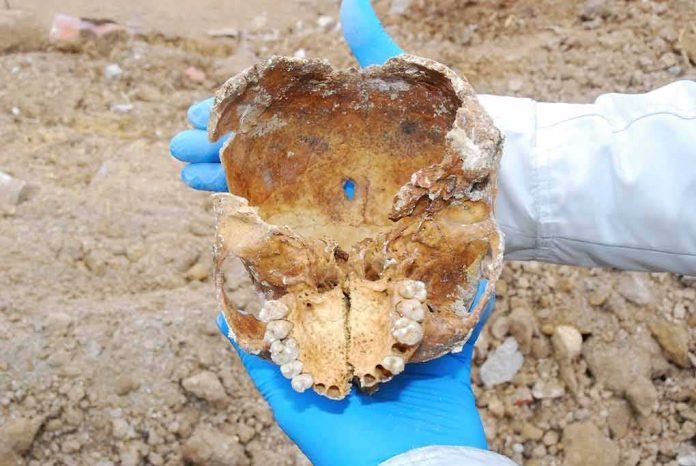
Hair and fingernails do something bone cannot: they grow in increments, laying down a chemical diary of the weeks before death, and that is precisely what let researchers reconstruct the final months of eight Inca children sacrificed five centuries ago atop Andean volcanoes.
Key Points
- A peer-reviewed toxicology study published in Antiquity found coca-related compounds in all eight analyzed mummies and alcohol markers in four of them.
- One mummy, the Lady of Ampato known as Juanita, tested positive for harmine, an alkaloid tied to ayahuasca-related plants, in a nail sample.
- The findings align with 16th-century Spanish chronicler accounts describing chicha given to children to calm them during the capacocha ritual.
- The remains were recovered from multiple mountain sites across Peru and Argentina, spanning a range of sacrificial contexts within the Inca Empire.
- The results extend, rather than overturn, earlier toxicological work on the Llullaillaco children, which found escalating coca and alcohol use before death.
What the Toxicology Actually Found
The study, titled “Toxicological studies on the Inca frozen mummies from volcanoes in Peru and Argentina,” examined hair and nail samples from eight mummified children recovered from high-altitude shrine sites across the former Inca Empire. Cocaine-related biomarkers turned up in every one of the eight, interpreted by the research team as confirmation that the children had chewed coca leaves — a practice with deep roots in Andean culture, long used for altitude tolerance, hunger suppression, and ritual offering. Four of the eight also tested positive for alcohol exposure, likely from chicha, the fermented maize beverage central to Andean ceremonial life. In Argentine samples, researchers additionally detected cocaethylene, a compound the body produces only when cocaine and alcohol are metabolized together, a chemical signature of combined use rather than separate, isolated exposures.
Hair and nails are useful here precisely because they are keratinized — dense, stable tissues that trap chemical traces and resist the decomposition that destroys soft tissue. Because hair grows at a roughly predictable rate, segmenting a strand lets researchers sketch an approximate timeline of exposure in the weeks or months leading to death, rather than a single undifferentiated reading. That is the same analytical logic forensic toxicologists use in modern drug-history cases, applied here to remains frozen and preserved by the extreme cold of the high Andes for roughly five hundred years.
The Capacocha Ritual and Its Documented Purpose
The children belonged to capacocha, one of the most sacred rites of the Inca state, performed to mark major political events, appease deities, or respond to catastrophe — drought, famine, the death of an emperor, military crisis. Selected children, often chosen for beauty, lineage, or ritual significance, were brought on long processions to mountain summits believed to be dwelling places of powerful spirits, where they were sacrificed and their bodies left to the cold, which mummified them naturally over centuries. Sixteenth-century Spanish chroniclers who documented Inca religious practice secondhand described chicha being administered to children specifically to dull their senses and calm them during the ritual’s final stage. The toxicology results in four of the eight mummies are consistent with that historical account, giving a biochemical echo to a practice previously known only through colonial-era writing.
The sample drew from several different mountain sites spanning Peru and Argentina, which matters because it captures variation across what was a geographically vast empire rather than a single isolated case. Earlier research had already established a version of this pattern: a 2013 toxicological analysis of three children recovered from Volcán Llullaillaco in Argentina — a 13-year-old girl and two younger children — found coca and alcohol markers that intensified in the months before death, with hair-segment data showing escalating ingestion as the children approached the summit and the ritual’s conclusion. The new eight-mummy study builds directly on that precedent, widening the geographic and demographic scope rather than introducing an entirely new method.
Juanita and the Harmine Finding
The most novel result involves Juanita, the Lady of Ampato, discovered in 1995 near the summit of Peru’s Ampato volcano and among the best-preserved Inca mummies ever recovered. Researchers detected traces of harmine in a nail sample taken from her remains — the only mummy in the group of eight to show this marker. Harmine is an alkaloid found in plants associated with ayahuasca, the psychoactive brew used in various South American ritual traditions, and its presence in Juanita’s nail distinguishes her toxicological profile from the other seven children tested. The finding establishes exposure to a harmine-bearing substance; it does not, on its own, specify which plant source delivered it or how it was prepared, and researchers have described the association rather than claiming direct identification of a particular beverage.
Why the Finding Matters
Exposure is not the same as intent, and toxicology alone cannot reconstruct what these children felt in their final hours — no chemical assay measures fear, sedation, or resignation directly. What the data does establish, convincingly, is that coca, alcohol, and in at least one case a harmine-bearing substance were administered to children before they were sacrificed, corroborating written colonial accounts with physical evidence drawn from the bodies themselves. That convergence — chronicler testimony and biochemistry arriving at the same picture independently — is what gives the study its weight. It reframes capacocha not as an abstract religious abstraction described only by outside observers centuries later, but as a ritual whose physical traces survive in the very children who lived it, preserved by the mountains that were meant to receive them.
Sources:
thegatewaypundit.com, gizmodo.com, yahoo.com