The real issue is not whether Iranian state television used menacing imagery about Donald Trump; it plainly did. The harder question is what that broadcast signifies: a calibrated act of propaganda and deterrence, or evidence of an active assassination operation. The available reporting supports the first interpretation more firmly than the second, even though the broader threat environment is genuine.
Key Points
- Iranian state TV aired Trump-related imagery with a Farsi warning translated as “This time it won’t miss,” and multiple outlets treated it as a severe threat.
- The broadcast arrived amid intense unrest inside Iran and escalating U.S.-Iran rhetoric, which gives the message its political context rather than proving operational intent.
- Separately, U.S. authorities have already documented a real Iranian-linked assassination plot against Trump in 2024, so the threat environment is not imaginary.
- What remains unproven is whether this specific broadcast was an authorized state threat, a piece of regime propaganda, or crowd imagery repackaged for television.
What the Broadcast Actually Shows
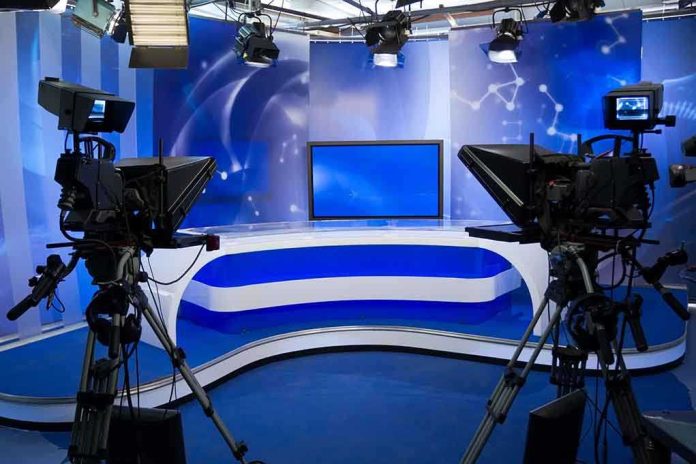
The core facts are straightforward. Iranian state television aired footage showing a man at a ceremony or rally holding a sign with Trump’s image from the 2024 Butler assassination attempt and a Farsi line rendered in English as “This time it won’t miss” or “the bullet won’t miss.” The channel involved was state-controlled, which is enough to make the message politically significant; it is not enough, by itself, to prove that Iran’s government formally ordered a direct assassination threat. That distinction matters, because modern authoritarian media often blurs the line between official policy, hardline faction signaling, and crowd-level theater.
Several reports describe the image as coming from a pro-government or pro-regime gathering, not as a clean government-issued graphic. That is the strongest reason to resist overreading the clip. A state broadcaster can amplify a threat without turning every frame into a binding state directive. In practice, that is one of the oldest techniques in political warfare: outsource the edge to the street, then let the state-owned microphone carry it further than it could safely say in its own voice.
Why the Context Makes the Message More Dangerous, Not More Certain
The broadcast landed in a combustible atmosphere. Reporting tied it to deadly unrest in Iran, with thousands killed or detained, and to a broader exchange of threats in which Tehran warned Washington against intervention while Trump and his advisers escalated talk of military retaliation. That setting explains why the clip resonated so widely. It was not an isolated piece of television theater; it was part of a larger pressure campaign in which image, timing, and repetition are as important as literal content.
Iran has long used this sort of personalized escalation against U.S. leaders. That does not mean every threatening image maps to a specific operational plan. The historical pattern is more complicated: hardline rhetoric, proxy signaling, information warfare, and, in some cases, real clandestine plotting have existed side by side. The result is that outside observers often flatten two different things into one: a government’s habit of menace and a government’s actual capacity or decision to execute a kill operation. Those are related, but not identical, realities.
The Strongest Evidence That the Threat Environment Is Real
The case for taking the danger seriously does not rest on the broadcast alone. The U.S. Department of Justice unsealed criminal charges in 2024 regarding a thwarted Iranian Revolutionary Guard Corps plot to assassinate Trump, which establishes that an Iranian-linked operational threat has already been documented at the federal level. Defense Secretary Pete Hegseth later announced that the figure believed to have orchestrated that plot had been eliminated, underscoring that U.S. officials were dealing with something more concrete than loose rhetoric. In other words, skepticism about the January 2026 broadcast should not be mistaken for disbelief that Iran-related assassination threats have existed.
That is the crucial balancing point. A real prior plot changes the background probability of later threats. It just does not collapse the evidentiary gap between a menacing state-TV clip and proof of a new operational directive. The Trump-Iran file is thick with intelligence warnings, public threats, and factional posturing; it is also full of ambiguity, because intelligence communities often speak in degrees of confidence, not courtroom proof. CNN’s reporting, for example, described Israeli intelligence as suggesting “less of a specific plot but more talk among Tehran’s hard-liners,” which is a materially weaker claim than an authenticated plan.
🔻Trump didn’t just say he’d pick Iran’s next leader.
He already had his man in place. 🚨
While Iran’s Foreign Minister stood on state TV insisting “the choice belongs to the Iranian people,” President Trump was on a secure line with Ali Larijani — the former Speaker of… pic.twitter.com/N9dSW6H6qa
— Kelly Red Pilling America (@KellyRedPini) July 16, 2026
How Propaganda Works in This Register
Iran’s information strategy is built to serve several functions at once. It can deter, provoke, test reaction, and rally domestic hardliners without ever pinning the leadership to a formal written order. That is why state media broadcasts are useful: they preserve deniability while broadcasting resolve. A state channel can circulate a threat that is vivid enough to shape behavior abroad and ambiguous enough to remain politically usable at home. This is not a glitch in the system; it is the system.
Seen through that lens, the Trump broadcast fits a familiar pattern of Iranian messaging: personalized, theatrical, and calibrated for maximum international attention. It also resembles the broader propaganda campaigns described in recent analysis of Iranian state media and social content, which emphasize victimhood, resistance, and psychological pressure rather than straightforward admission of covert operations. The message is meant to travel farther than its authors ever need to defend in detail.
Why the Authorization Question Still Matters
The most consequential unresolved issue is authorship. A broadcast on state television is not the same as a formal declaration from the Iranian government or security establishment, and the reporting available here does not provide one. That leaves three plausible readings: first, a deliberate state propaganda decision; second, a hardline faction message tolerated by the regime; third, crowd footage repurposed by broadcasters in a way that heightened its menace. The public record does not conclusively separate those possibilities.
That ambiguity is not a trivial footnote. It determines how one interprets intent, responsibility, and escalation risk. A regime can be hostile, threatening, and dangerous without every hostile broadcast being a direct operational order. Conversely, a state can use unofficial voices to telegraph violence while keeping formal distance from it. The savvy reader should hold both truths at once: the clip was menacing, and the evidence for a specific new assassination plan remains less settled than the rhetoric surrounding it.
The practical consequence is that analysts, policymakers, and security services should treat the broadcast as part of a credible threat environment while resisting the temptation to convert every piece of alarming imagery into proof of a fresh plot. That is the discipline serious threat analysis requires: separate the signal from the theater, then decide what each is doing.
Sources:
pjmedia.com, news18.com, indiatoday.in, msn.com, youtube.com, thehill.com, iranintl.com, timesofindia.indiatimes.com, the-express.com, washingtonexaminer.com, uk.news.yahoo.com, ptcnews.tv