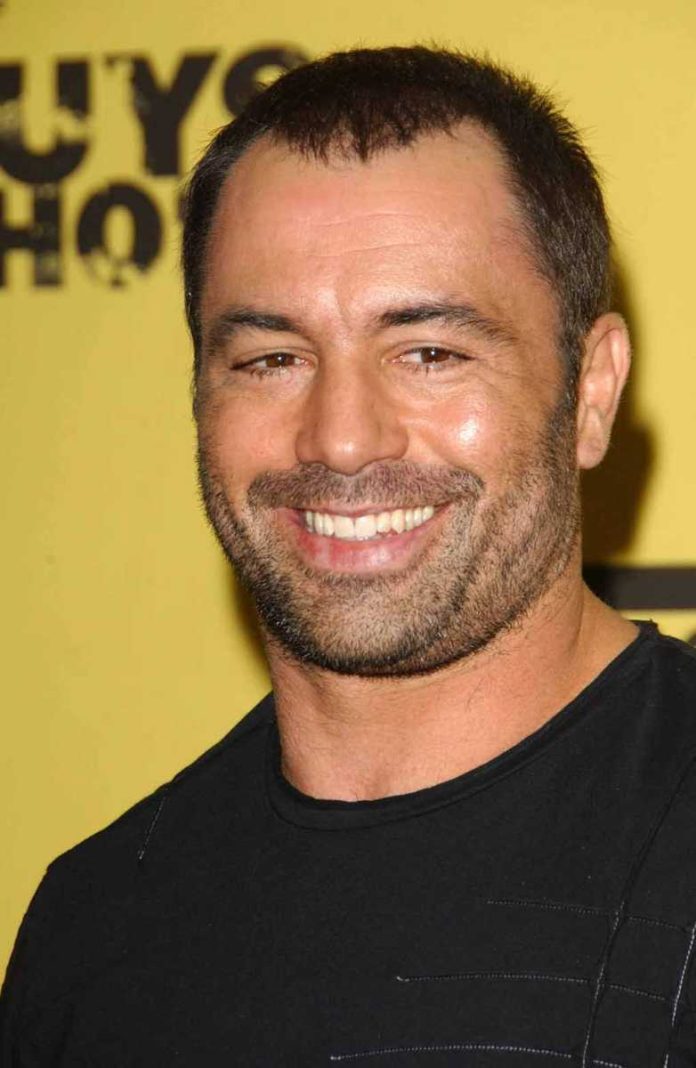
The Rogan–Spotify renewal is less a celebrity headline than a clear signal of how podcast power is priced today: platforms now pay for audience access and ad rights, not for exclusivity—and the biggest shows command terms that reflect that shift.
The Short Version
- Spotify officially renewed a multiyear licensing agreement with Joe Rogan’s The Joe Rogan Experience.
- Distribution remains non-exclusive: new episodes continue on Spotify and on other platforms.
- Multiple outlets, citing the Wall Street Journal, report a deal value around $250 million; Spotify did not disclose terms.
- The structure fits Spotify’s pivot from exclusivity toward licensed reach plus platform-controlled ad sales.
What’s confirmed: a new multiyear license, still widely distributed
Spotify announced it has extended its partnership with Joe Rogan under a new multiyear licensing agreement for The Joe Rogan Experience. The company framed the deal as a continuation of a “longstanding relationship” and, crucially, confirmed that Rogan’s show will remain available on Spotify as well as across other platforms—cementing the non-exclusive distribution model that replaced the 2020 Spotify-only arrangement. That point matters because it explains both the economics and the strategy: Spotify is opting to monetize Rogan’s reach wherever it occurs rather than fence it behind a paywall of exclusivity.
Independent reporting quickly matched the corporate announcement. Reuters described the agreement as a renewal that extends a partnership first inked in 2020, noting that since the 2024 reconfiguration the show has also been distributed on Apple, Amazon, and YouTube. Rogan himself publicly praised the fit, calling Spotify “incredible to work with,” while Spotify’s content partnerships leadership spoke about continuing cooperation—on-record statements that underscore that this is not a tentative or experimental tie-up but a deliberate extension of a durable, high-stakes relationship.
The price tag everyone’s talking about—and what it actually means
Most headlines put the figure near $250 million. That number has been reported by multiple outlets attributing it to the Wall Street Journal and to people familiar with the terms. Spotify, for its part, did not disclose financial details. Where precise: Reuters characterized a prior Rogan arrangement’s $250 million as an estimated earnout—a contingent payout tied to performance triggers or revenue milestones—rather than a simple guaranteed sum. Read correctly, the current chatter suggests the renewal is valued in that same neighborhood and may include similar contingent mechanics; the market takeaway is the magnitude and the performance-aligned structure, not an upfront cash guarantee.
Why structure it that way? For a show with an enormous, personality-driven audience, ad inventory and distribution breadth are the revenue engine. An earnout is a rational way to share risk and upside: Spotify controls ad sales and gets scale; Rogan participates in the economics as the audience delivers. The absence of a public contract is normal here; what’s salient is consistency across credible reporting and the fact that the financial narrative matches Spotify’s broader pivot away from locking content down and toward monetizing it across the open ecosystem.
How we got here: from exclusivity to licensed reach and ad control
In 2020, Rogan’s show went exclusive to Spotify under a landmark license—an emblem of the platform’s effort to differentiate its audio catalog and fuel subscriber growth. That era proved what exclusivity can buy—attention and leverage—but also what it can cost: constrained audience growth on rival platforms and higher platform-level marketing burden. By 2024, Spotify had shifted Rogan back to a non-exclusive footprint, retaining the commercial heart of the deal—advertising sales—while letting distribution run where the audience already lives. The 2026 renewal codifies that evolution: Spotify pays for sustained access to the biggest podcast audience and for the right to sell and serve the ads against it, irrespective of where a listener hits play.
This pattern tracks Spotify’s broader podcast recalibration. After investing heavily in originals and high-profile exclusives, the company has emphasized operating discipline: fewer bets on walling off content, more focus on monetization systems that travel with the show. For scale titles, the math is straightforward. Exclusive windows can spike platform metrics, but open distribution, combined with centralized ad sales and targeting, can maximize gross impressions, lower customer acquisition costs, and stabilize yield. Rogan’s show—long a top draw and a dependable traffic engine—fits that model perfectly.
What we know—and don’t—about the deal’s mechanics
Three features are clear. First, it is multiyear; second, it is a license, not an acquisition; third, distribution remains non-exclusive. The rest—precise term length, minimum guarantees, tiered bonuses, renewal options, audit rights—remain undisclosed, which is standard for private commercial agreements of this scale. Given precedents in large creator-platform deals, expect a hybrid compensation model: guaranteed base plus variable earnout tied to ad revenue, audience reach across platforms, and possibly video view thresholds. Expect, too, clauses that define Spotify’s role as exclusive ad sales partner for the show’s inventory, on and off platform, which is what allows Spotify to justify nine-figure economics without demanding exclusivity.
Performance alignment serves both sides. For Spotify, contingent payments protect against macro ad slumps or audience erosion; for Rogan, upside triggers reward continued growth, extended video presence, and the kind of marathon episode consistency that keeps feed momentum. The industry significance isn’t the unpublished line items; it’s that this structure is now the template for platform–superstar relationships in audio.
Why the platform doesn’t need exclusivity anymore
Audio advertising has matured. Programmatic pipes, better targeting, and platform-level sales teams can now follow audiences across services, especially when a single entity coordinates ad inventory and measurement. In that world, exclusivity is a tax on total reach. Open distribution, by contrast, increases available impressions and lowers the friction of discovery—particularly on YouTube, where podcast video and clips expand the funnel. If a platform can sell or syndicate the ads across those channels, it captures monetization without paying the hidden costs of fencing content in. Spotify’s decision to renew Rogan on non-exclusive terms while keeping ad control reflects that strategic calculus.
There is another advantage: operational resilience. Non-exclusive distribution de-risks platform outages, algorithmic whims on any single app, and geographic coverage gaps. For a flagship show that releases several long episodes weekly, those practicalities translate into steadier delivery and steadier revenue.
🚨BREAKING: Joe Rogan renews Spotify deal worth an estimated $250 million. pic.twitter.com/P9wjg3yL4E
— Emma 🇺🇸 (@Emmaiid11) October 9, 2026
What it means for creators, advertisers, and platforms
For creators at scale, the message is clear: own your IP, distribute broadly, and negotiate for a partner that can professionalize ad sales and underwriting at global scale. The premium goes to consistency and audience trust, not to platform captivity. For advertisers, the renewal simplifies planning: the largest talk show in audio is accessible wherever listeners prefer to consume, while campaign execution can be centralized through a single commercial counterparty. That combination—audience ubiquity and sales centralization—is exactly what brand budgets want when they move from test buys to full-funnel, year-round commitments.
For platforms, the competitive frontier is no longer who can buy exclusivity; it’s who can operate a superior monetization stack for third-party IP. Measurement fidelity across distribution endpoints, robust brand-safety tooling, dynamic ad insertion with high fill rates, and creator-friendly revenue shares are the levers. Spotify’s willingness to renew Rogan on these terms signals confidence in its stack—and a recognition that in the current market, the most valuable asset is not a walled garden but a well-run marketplace.
Sources:
washingtontimes.com, newsroom.spotify.com, reuters.com, musicbusinessworldwide.com, mmamania.com