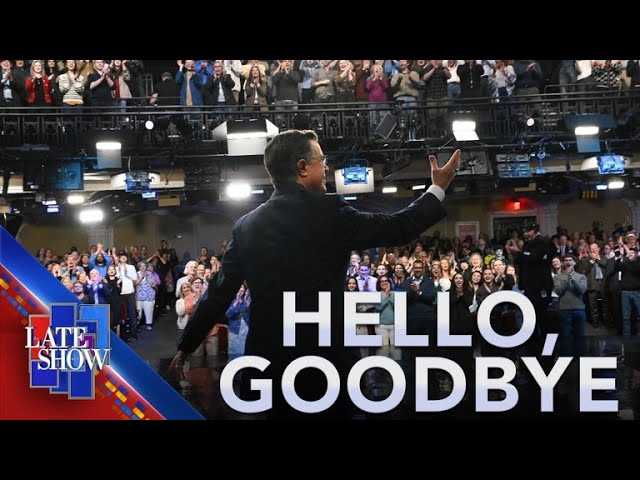
Bruce Springsteen told Stephen Colbert, on air, that he lost his show because a president could not take a joke—and because powerful moguls wanted something enough to flatter him for it [1].
Story Snapshot
- Springsteen blamed political thin skin and corporate courtship for Colbert’s finale, naming Donald Trump and the Ellisons on Colbert’s stage [1].
- The remarks were live, contemporaneous, and tied to Colbert’s penultimate broadcast—not a retroactive post [1].
- Evidence beyond Springsteen’s accusation remains thin; no corporate records or sworn statements back the causal link [1].
- The episode spotlights the fog where media business, politics, and celebrity activism collide [1][2].
A pointed on-air accusation, delivered in real time
Bruce Springsteen looked Colbert in the eye and framed the host’s exit as political punishment. He said Colbert was “the first guy in America who’s lost his show because we got a president who can’t take a joke,” and added that Larry and David Ellison “feel they need to kiss his ass to get what they want” [1]. The musician called the Ellisons “small-minded people,” then dedicated a performance to Colbert. The timing mattered: this unfolded during Colbert’s penultimate episode, not in a later social-media flourish [1].
Springsteen folded his critique into performance, launching “Streets of Minneapolis,” described in coverage as a protest piece tied to immigration enforcement controversies earlier in the year [1]. He cast the moment as an intervention for free expression, turning a farewell-week booking into a referendum on power and speech. That fuses two American instincts—back the artist, and question the boss—while ensuring the quote would outrun the music. The message landed where it would travel fastest: in prime time with a sympathetic audience [1].
What exists in the record—and what does not
The public record holds Springsteen’s words and the show’s calendar; it does not contain corporate memoranda linking Donald Trump or the Ellisons to the cancellation decision [1][2]. No contract disclosures, internal emails, or board minutes have surfaced to verify political influence on timing or outcome. The allegation of motive—“kiss his ass to get what they want”—is an assertion without corroborating documentation in the supplied material [1]. That leaves two truths: the on-air charge was clear and direct, and the evidentiary trail, at least publicly, is thin.
Colbert’s final-week plans are documented through entertainment reporting about guest lineups and the end-of-run framing, which confirms the context but not the cause [2]. That distinction matters. A live accusation can be sincere and still unproven. Without testimony from executives or released records, the cancellation’s why remains contested terrain. The absence of a detailed response from CBS, Paramount, Skydance, or the Ellisons keeps the vacuum intact—and vacuums reward the simplest story line [1][2].
How power, deals, and late-night collide
High-stakes mergers and talent decisions often proceed behind closed doors where legal exposure and shareholder risk drive message discipline. Corporations tend to present programming changes as normal business. Activists and artists tend to read them as ideological weather vanes. Those frames compete when a star names names on a national stage. The broader pattern—political pressure alleged, corporate rationale withheld—recurs because private documents stay private while public attention rewards sharp, moral language over footnotes [1].
American conservative values emphasize free speech, transparent governance, and institutional restraint. On that score, two points can coexist. First, any attempt—governmental or corporate—to punish lawful satire would offend basic constitutional instincts and common-sense pluralism. Second, accusations about backroom appeasement require proof. No free society can police jokes to protect leaders, and no serious claim about quid pro quo should stand on applause alone. The fix for both problems is sunlight: transcripts, emails, sworn statements, and accountability.
What would settle the question
Discovery-grade records could clarify whether politics influenced Colbert’s end. Internal communications from CBS, Paramount, and Skydance; board minutes touching on late-night strategy; any exchange referencing Donald Trump or regulatory leverage; and sworn testimony from decision-makers would move the debate from inference to evidence [1]. Short of that, partisans will choose their priors: either a business call wrapped in bad optics, or a chilling example of power protecting itself. Until documents speak, the quote will carry the day, not the data [1][2].
Sources:
[1] Web – Springsteen Rips Trump, Ellisons Before Performing ‘Streets of …
[2] Web – Trump’s Rocker Nemesis Flames Colbert’s ‘A**-Kissing’ Bosses