The most important fact in the current debate is not that China accessed millions of American voter records—that is now well documented—but that, despite years of increasingly alarmed rhetoric, there remains no evidence that any foreign government has changed U.S. vote counts or materially altered election outcomes.
Key Points
- Declassified U.S. intelligence confirms Chinese actors collected or acquired millions of American voter records over multiple years, in what officials describe as a massive compromise of election data.
- Internal FBI emails released by Senator Chuck Grassley indicate that FBI Headquarters interfered with an alleged probe into Chinese election interference, raising questions about transparency and politicization inside the bureau.
- Former CIA counterterrorism officer John Kiriakou, known for publicly confirming CIA waterboarding in 2007, has emerged as a prominent commentator tying Trump’s address to broader concerns about U.S.–China strategic competition.
- Despite the scale of China’s data acquisition, U.S. intelligence assessments and independent experts consistently find no evidence that any foreign actor—China included—changed votes, altered voter rolls, or manipulated official election results.
Trump’s Address and the Claim of a Massive Chinese Data Breach
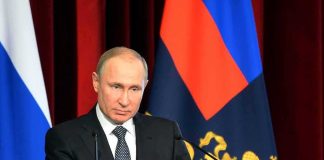
Donald Trump’s primetime election security address rested on a striking assertion: that the People’s Republic of China executed “the largest compromise of election data in history,” illicitly acquiring some 220 million U.S. voter files beginning in the 2020 cycle. The White House election integrity site now reflects this framing, describing a years-long operation through which Chinese actors obtained voter information at national scale. Fact-checkers and independent reporting, however, show that the underlying declassified documents describe something narrower and more prosaic than the rhetoric suggests.
One key document, released on July 16, details a Chinese actor in early 2022 downloading state voter information spanning 2013–2021 from commercial U.S. data vendors—material that states lawfully sell or make available as public records. Other declassified intelligence indicates that Chinese services accessed and analyzed voter registration data from multiple states to conduct public opinion analysis during the 2020 general election. The aggregate of these activities is serious from an intelligence and privacy standpoint: Beijing was able to compile extensive profiles of American voters, including names, addresses, contact information, and party affiliation. But the documents released so far do not substantiate the precise figure of 220 million files, nor do they demonstrate that China tampered with registration systems or ballot tabulation.
What China Did—and Did Not—Do to U.S. Elections
The distinction between what China demonstrably did and what it is accused of doing matters for how we understand U.S.–China relations. Declassified records and subsequent reporting converge on three core elements. First, Chinese government-linked actors obtained large volumes of U.S. voter data, in part by penetrating databases and in part by purchasing or scraping information that state authorities themselves sold or made public. Second, Chinese intelligence officials used that data for analysis—mapping demographic and political patterns to refine their understanding of American society and possible influence levers. Third, there is no credible evidence in the released material that China altered voter rolls, generated fraudulent ballots, interfered with vote counting, or compromised certification processes in the 2020 election.
That last point is reinforced by formal U.S. government assessments issued both during and after Trump’s presidency. A joint report from the Department of Justice and Department of Homeland Security, including CISA and the FBI, concluded that they had “no evidence” that any foreign government-affiliated actor prevented voting, changed votes, disrupted tabulation, or compromised the integrity of voter registration information in the 2020 federal elections. A separate declassified intelligence assessment stated with high confidence that China “did not deploy interference efforts” and merely considered but did not undertake influence operations intended to change the outcome of the 2020 presidential race. Independent organizations, such as the Brennan Center for Justice, likewise distinguish between foreign “interference”—illegal actions aimed at voting systems—and “influence” efforts, and report no evidence of the former in 2020, even as Russia and Iran ran information campaigns.
The net effect is clear: China’s conduct falls squarely within the realm of espionage and potential influence preparation, not proven manipulation of American votes. It is a serious national security concern—but not evidence that Chinese operations have yet determined who sits in the Oval Office.
FBI Suppression Allegations and the Politics of Intelligence
If China’s data collection is one strand of the story, the domestic handling of related intelligence is another. Senator Chuck Grassley, long a central figure on the Senate Judiciary Committee, released internal FBI emails alleging that FBI Headquarters interfered with a probe into Chinese election interference. According to Grassley’s description, senior officials moved to suppress or sideline investigative steps that might have brought the alleged Chinese activities into sharper public view, in part to shield then–FBI Director Christopher Wray from political blowback. Those emails, now central to calls for transparency, fuel a broader narrative that the FBI has become a gatekeeper for politically sensitive intelligence, managing what reaches elected leaders and the public.
If substantiated through fuller document releases or sworn testimony, such interference would not change the underlying facts about what China did; it would instead frame those facts as something the U.S. security establishment chose not to highlight when they might have complicated domestic political debates. Grassley’s records have prompted demands for Freedom of Information Act requests targeting all FBI materials linked to the Chinese interference probe, as well as calls for congressional depositions of FBI personnel involved in the decisions, including Wray and other senior staff. For readers focused on institutional integrity, the question is less whether election outcomes were altered—intelligence assessments say they were not—and more whether public accountability mechanisms function when foreign threats intersect with domestic political narratives.
John Kiriakou’s Role: A Former Insider Interpreting the Landscape
Into this mix steps John Kiriakou, a former CIA counterterrorism officer whose career spans operational work, public controversy, and criminal conviction. Kiriakou gained national attention in December 2007 as the first U.S. government official to publicly confirm that waterboarding was used at CIA “black sites” to interrogate detainees—a revelation that crystallized public debate about torture and intelligence practices. In 2012, he pleaded guilty to intentionally disclosing information identifying a covert CIA officer, a felony that resulted in a 30‑month prison sentence. That record makes him, simultaneously, a witness to the inner workings of U.S. intelligence and a figure whose judgment about classified matters some will view with caution.
In his appearances discussing Trump’s speech and U.S.–China relations, Kiriakou argues that China’s acquisition of U.S. voter data fits a broader pattern of Beijing outpacing Washington in long-term strategic planning and cyber operations. He frames the voter-file issue not simply as a technical breach but as evidence that America is “losing to China” in the contest over information dominance and strategic foresight. From his vantage point, the combination of Chinese data harvesting and perceived institutional reluctance in Washington to confront it reflects a deeper vulnerability: a political system slow to acknowledge the scale of foreign intelligence targeting and even slower to adapt.
How much weight to give his analysis depends, reasonably, on how one weighs his experience against his past disclosure offense. Yet the factual backbone of his commentary—the reality of Chinese access to voter data, the difference between data collection and vote tampering, and the institutional complexity of U.S. intelligence—is supported by independent reporting and official documents. His value in this conversation lies less in breaking new facts than in connecting them to a broader narrative about power and complacency.
Influence, Interference, and the Strategic Stakes with China
One recurring source of confusion in public debate is the conflation of foreign “influence” with foreign “interference.” Influence operations encompass efforts to shape public opinion, elite behavior, or policy outcomes—through propaganda, lobbying, covert funding, or targeted messaging. Interference refers to illegal actions aimed directly at the mechanics of voting: hacking registration systems, altering ballots, disrupting tabulation, or compromising certification. Legal and intelligence analyses treat these as distinct categories with different statutory and strategic responses.
The record across recent U.S. elections is consistent. Russia has run influence campaigns and probed election infrastructure; Iran has engaged in disinformation and intimidation; China has studied voter data and, by 2022, expanded influence activities around U.S. politics. Yet joint U.S. government reports for 2020 and 2022 find no evidence that any foreign actor materially affected the integrity of election infrastructure or vote tabulation. This does not mean the threat is minimal; rather, it means the line between serious intelligence targeting and operational success has not yet been crossed in a way that changes certified results.
For U.S.–China relations, this distinction carries practical consequences. Beijing’s collection of voter data amplifies its capacity to understand American political fault lines and potentially to tailor future influence operations—online campaigns designed to deepen polarization or erode trust in institutions. It also heightens American suspicion, feeding a political environment in which China is increasingly cast as the primary foreign election threat, even when intelligence reporting does not support that ranking for past cycles. The more Washington speaks in maximalist terms about Chinese “hacks,” the harder it becomes to sustain nuanced diplomacy and targeted counterintelligence responses.
Policy Responses, Legislative Debates, and What Comes Next
Trump’s address folded the China revelations into domestic legislative advocacy, promoting a “Save America Act” focused on voter identification and election security. Opposition from figures such as Senators Mitch McConnell and Lisa Murkowski centers on federal overreach and potential disadvantages for rural voters, illustrating how foreign threat narratives quickly intersect with longstanding disputes over election administration. Notably, these legislative debates often revolve around domestic access rules—ID requirements, registration procedures—rather than the specific mechanisms by which foreign actors might exploit or penetrate voter systems.
More targeted policy responses, suggested by both watchdogs and national security specialists, include comprehensive forensic audits of state voter database access logs to clarify the scope and method of Chinese intrusions from 2016 onward; expanded transparency requirements for intelligence agencies regarding foreign targeting of election infrastructure; and strengthened guardrails inside organizations like the FBI to prevent politically motivated suppression or amplification of foreign interference findings. None of these measures require accepting unverified claims about changed vote counts. They instead treat foreign data collection and potential influence operations as serious threats to be managed with evidence-driven tools.
The enduring lesson is straightforward. China’s acquisition and analysis of U.S. voter data represents a significant escalation in its understanding of American political life and a warning about the porousness of U.S. information systems. Intelligence agencies, however, consistently report that ballots and tallies remain secure from foreign manipulation. Keeping both truths in view is essential. Overstating what China has done corrodes trust in elections; understating it invites complacency in the face of a capable adversary. For U.S.–China relations, the challenge is to respond to real intelligence threats with clarity and proportion—neither minimizing them nor inflating them into myths about stolen presidencies.
Sources:
youtube.com, justice.gov, en.wikipedia.org, judiciary.senate.gov, bbc.com, dni.gov, edition.cnn.com, deseret.com, brennancenter.org, govinfo.gov, iss.europa.eu