Every fight about changing the White House is never only about bricks and paint; it is a proxy battle over what kind of presidency the country wants, where preservation norms meet the political incentives to turn aesthetics into argument.
The Short Version
- Presidents routinely alter the White House; defenders call it stewardship, critics call it vanity. Both can be true in a single project.
- President Trump defends a renovation program — citing disrepair and symbolic upkeep — while Barack Obama ridicules it as misplaced priorities and gaudy taste, complete with a “Cheesecake Factory” jab.
- Public reporting identifies specific projects — a ballroom, a heliport, exterior repairs, landscaping changes, and new decorative elements — but offers little independent documentation on necessity versus preference.
- The historical pattern is clear: Jefferson to Truman to Kennedy, major White House changes have always sparked arguments over cost, authenticity, and presidential self-indulgence.
What is actually known — and what is not
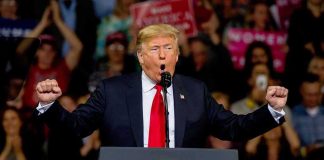
Trump has made a contemporaneous, specific claim: the White House he inherited required substantial work, describing it as “dirty, filthy, dirty, and broken,” with cracked windows and missing exterior elements. He framed the residence as a national symbol that “has to be clean, pristine, beautiful,” and he publicly linked that stewardship rationale to the current renovation push. Those statements are on the record in his October rally remarks responding to Obama’s mockery.
Separately, credible outlets identify tangible components tied to the program: construction of a ballroom, a heliport, exterior plaster repairs, landscaping modifications, and additions in the Oval Office. The list matters because it moves this debate from allegation to identifiable projects, each of which can be evaluated for safety, preservation, security, accessibility, or sheer discretion. What the public record does not yet supply are the technical underpinnings that would settle necessity: inspection reports, condition assessments, contract scopes, and historic-preservation reviews. That gap leaves the merits of any single element — the ballroom most notably — contested terrain rather than adjudicated fact.
Why the rhetoric is loud: incentives, not just taste
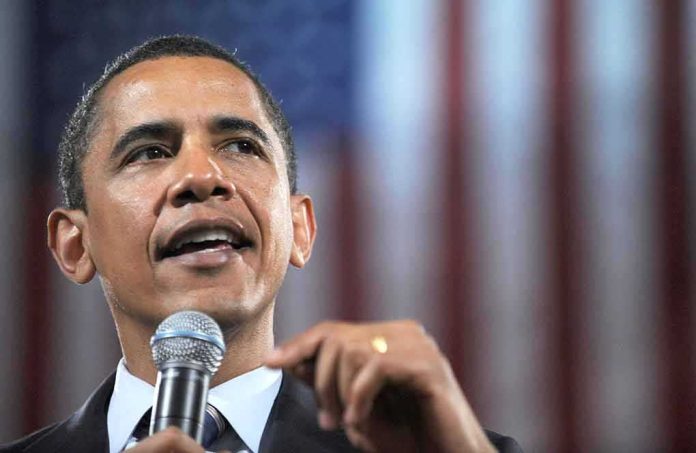
Obama’s critique is a clean line for a campaign stage: accuse the president of obsessing over décor while voters feel price pressure, then attach a memorable image — “Saddam Hussein opened a Cheesecake Factory.” The point is political prioritization, not a building survey. The available record grounds what he said; it does not independently validate specific claims about the Rose Garden, a sidewalk helipad, or a ballroom “bigger than the White House.” As persuasion, the attack works because it compresses several alleged projects into a single symbol of excess, a classic move in the attention economy where sharp-edged, personal framing earns disproportionate coverage.
This is familiar terrain. When presidents change 1600 Pennsylvania Avenue, critics argue taste, cost, or authenticity, while defenders cite function, security, or overdue maintenance. The dynamic produces heat because it fuses identity, money, and national heritage in one building — and because the press reliably amplifies the most vivid line. Research on divisive rhetoric and media incentives helps explain why the Cheesecake Factory metaphor traveled farther than the prosaic demands of procurement and preservation compliance.
The long arc: preservation versus presidential discretion
The White House has always been both a working complex and a museum of the republic. That dual character guarantees friction. Thomas Jefferson added colonnades and altered grounds, provoking contemporaneous grumbling about propriety. Theodore Roosevelt split residence from office, transforming the building’s function. Harry Truman — facing genuine structural crisis — gutted the interior to the studs and rebuilt within the preserved shell, an intervention prompted by an unsafe, failing structure. Jackie Kennedy’s restoration prioritized historical character and curation over new construction; later presidents layered on bowling alleys, pools, and communications infrastructure, each drawing its own cycle of complaint and defense. The throughline is simple: necessity and preference have always been inseparable in practice, even when architects can distinguish them on paper.
This context matters today because it supplies the right test. The question is not whether a president may change the White House — they always have — but whether any specific change clears three hurdles: demonstrable need (safety, operations, security, accessibility, or verifiable deferred maintenance), compliance with historic-preservation review, and transparent procurement proportional to the public interest at stake.
Parsing the current claims with that test
On need: assertions about cracked windows, damaged exterior elements, and dirty conditions are the kind of defects a facilities director could verify quickly; yet the public record, as of now, lacks the inspection files that would substantiate system-wide deterioration. Without those documents, claims about the building being in the “best shape since 1792” read as flourish rather than a comparative assessment rooted in methodology and prior baselines. The same applies in reverse to ridicule about paving, pads, and gold leaf — evocative, but not a substitute for a scope-of-work.
On preservation: major exterior or grounds alterations typically pass through bodies such as the Commission of Fine Arts and the National Capital Planning Commission; presidential precinct security adds layers involving the Secret Service and the National Park Service. Historically, these reviews leave a paper trail — minutes, approvals, conditions — precisely because 1600 Pennsylvania Avenue is both symbol and site. Public-facing confirmation of those steps would go a long way toward cooling speculation about the ballroom, landscaping, and any helipad infrastructure.
How to move from spectacle to substance
This debate becomes serious once the underlying records are surfaced. The essential materials are routine in federal capital projects: condition assessments and photographs; scopes of work mapping each line item to a need category (deferred maintenance, life safety, security, accessibility, operational expansion, or discretionary aesthetic); procurement files and contracting artifacts (solicitations, awards, change orders); and preservation reviews with any stipulated mitigations. At that point, the ballroom can be judged as either a program space justified by state and press demands or as discretionary expansion that belongs in a donor-funded, non-federal bucket; a heliport can be weighed as a security and continuity-of-government asset or as avoidable intrusion; landscaping changes can be parsed as drainage, accessibility, or optics.
Until then, the strongest claim that stands on evidence is limited but important: specific projects are underway or proposed, and a public defense exists tying them to stewardship of a national symbol. The counter-case, at present, is rhetorical rather than evidentiary — potent on a stage, thin as verification. That asymmetry is why this argument repeats across eras: the politics scale easily, the documentation never makes headlines.
"The unusually personal attacks Saturday marked Obama's first major sustained campaign offensive against Trump since the Republican began his second term in January 2025, escalating their long-running feud just days before the Nov. 3 midterm elections.
THE FIRST SINCE TRUMP…
— Vince Sanchez (@DefeatTheeBeast) October 26, 2026
What it means going forward
For citizens who care about both fiscal prudence and national heritage, the right posture is neither reflexive outrage nor blind deference; it is demanding the paperwork. If the files show legitimate maintenance and security needs long deferred, the work should proceed and be explained as such. If they show high-discretion construction untethered from mission requirements, then the remedy is sunlight, scaled-back scopes, and, where appropriate, private funding routed through entities with preservation guardrails. Either way, the building endures — as it has through fires, reconstructions, and fads — and the country gets a clearer view of how symbolism and statecraft share the same address.
Sources:
nypost.com, axios.com, freep.com, al.com, cnn.com, youtube.com, mmajunkie.usatoday.com, academic.oup.com, britannica.com, democratandchronicle.com