Wartime policy often forces a hard distinction the slogans can’t hold: protecting national security and protecting religious freedom are not mutually exclusive, but they do collide. Ukraine’s leadership now argues it is navigating that collision—denying religious persecution at home while supporting a tightly bounded humanitarian cease-fire in Russian-occupied Oleshky as a practical step to save lives, not a prelude to capitulation.
The Short Version
- Zelensky rejects claims that Ukraine persecutes Christians and points to pluralistic religious engagement as policy, not propaganda.
- Critics focus on Kyiv’s restrictions against Moscow-linked religious bodies, calling them repression; UN experts have warned of overbreadth.
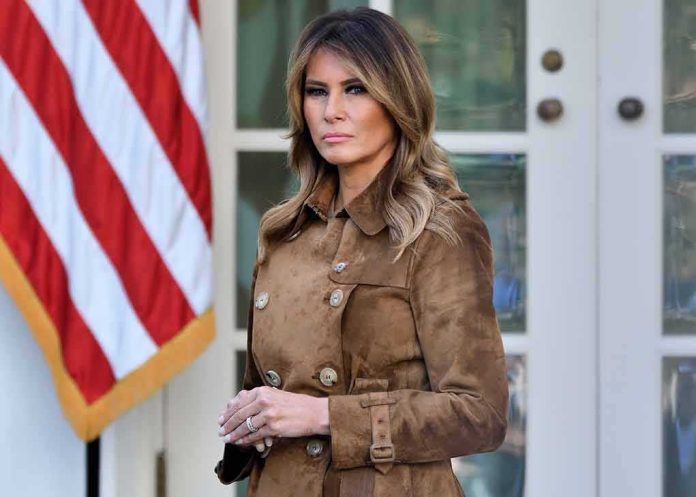
- A localized cease-fire in Oleshky—brokered through First Lady Melania Trump—was framed as a humanitarian pause to deliver aid and evacuate civilians.
- The argument that the cease-fire is “mere PR” misses the mechanics that make local humanitarian pauses useful and the guardrails that keep them from freezing the war.
What Zelensky is—and isn’t—arguing about religion
Ukraine’s president has addressed head-on the charge that Kyiv is persecuting Christians, asserting that religious groups are free and regularly engaged through an institutional forum that brings leaders to the presidential office. His case rests on two planks: a claim of pluralism in practice and a distinction between belief and conduct—faith is protected; collaboration with an invading power is not. Critics, most prominently in U.S. media, have cited Kyiv’s measures against Moscow-linked institutions as proof of repression. That critique conflates a targeted national security policy with hostility to religion writ large; the government’s rebuttal is that measures are linked to wartime intelligence concerns, not doctrine or worship per se.
The controversy is real, and the terrain legally complex. UN-appointed experts have warned that dissolving religious organizations on broad “pro-Russian” or “extremist” grounds risks violating religious freedom and legal-certainty norms—especially if the evidentiary standards and due process are vague or inconsistently applied. That warning deserves weight because it isolates the right question: not whether the state may ever constrain a religious body’s conduct during war (it may), but whether specific constraints are tightly tailored to demonstrable security risks and overseen by courts able to say no. Put differently, wartime necessity is not a blank check; it is a standard that demands proof and proportionality.
Sorting disinformation, evidence, and the real dispute
Some of the debate has been polluted by misleading imagery of “burned churches” attributed to Ukrainian authorities. Independent reporting shows that widely shared footage included a Canadian church fire and structures hit by Russian strikes, not Ukrainian crackdowns; even a lawyer aligned with the Moscow-linked church acknowledged errors in that presentation. Precision matters. When the conversation is anchored in doctored context, it obscures the real policy question: are Kyiv’s measures against organizations with operational ties to the Moscow Patriarchate lawful and proportionate? Responsible analysis separates two things—debunking false claims does not by itself validate every state action, and legitimate security concerns do not launder overbroad restrictions.
The sharper disagreement is therefore not theological but evidentiary. Kyiv argues it has documented cases of church-linked cooperation with Russian security services; critics counter that enforcement has swept too broadly, chilling worship and community life. International law protects belief and worship even in armed conflict but allows carefully bounded limits on conduct that credibly threatens security. The right test is case-by-case, with independent review—an approach consistent with the concerns raised by UN experts and with Ukraine’s own interest in sustaining rule-of-law credibility while fighting for survival.
The Oleshky cease-fire: small by design, meaningful if done right
Against that domestic backdrop, Ukraine supported a localized cease-fire in Oleshky, a Russian-occupied city facing acute humanitarian distress. The arrangement—brokered through First Lady Melania Trump, according to the White House and multiple outlets—was explicitly limited: a pause to move aid and evacuate civilians through designated corridors, not a political settlement or a general armistice. Humanitarian pauses of this kind can save lives precisely because they are narrow, time-bound, and task-specific; they create a predictable window for agencies to operate without blessing territorial changes or signaling fatigue with the broader war aims.
Detractors called the Oleshky pause a public-relations play or a step toward freezing the front. That critique underestimates how humanitarian cease-fires are engineered when lines are fluid and trust is thin. The logic is essentially logistical, not diplomatic: specify geography and duration to the hour; codify what moves when and in what sequence; build in simple verification—escorted convoys, checkpoint handoffs, redundant communications—so one side’s breach is visible and attributable. Done that way, a local truce neither legitimizes occupation nor locks in the status quo; it creates a corridor, not a compromise.
Mechanics that determine whether a pause holds
Cease-fires fail for predictable reasons: ambiguous terms, no verification, and mismatched incentives. Comparative experience—from the OSCE’s pre-2022 monitoring in Ukraine to UN guidance on cease-fire design—points to three success factors for even brief humanitarian pauses. First, clarity beats breadth: the smaller the map and the tighter the clock, the less room there is for miscalculation or opportunism. Second, verification must be feasible with the actors and technology at hand; if neutral monitors cannot deploy, the parties must agree to reciprocal observation that still produces accountable records. Third, the humanitarian task should be finite—deliver food, evacuate a named cohort—so compliance is visible, not subjective.
By those standards, Oleshky’s design—as publicly described—follows the orthodox playbook for a narrow pause. That does not immunize it from manipulation in the information domain; images of swept streets and staged optics are cheap. But the right yardstick is operational: did aid move, did civilians get out safely, and were any violations clear enough to attribute and deter? Tactical pauses are judged by outcomes, not atmospherics.
Where principled disagreement belongs—and where it doesn’t
Three critiques merit serious hearing. One, that security-driven religious restrictions can metastasize without strong due process; the remedy is tighter statutes, evidence thresholds, and real judicial review, not rhetorical absolutes. Two, that humanitarian pauses can be repurposed by an occupying power to sanitize its image; the antidote is transparent, third-party–traceable metrics of aid delivered and people evacuated. Three, that highly personalized mediation—in this case, through the U.S. First Lady—can eclipse institutional diplomacy; the balance is to translate ad hoc openings into structured, monitorable arrangements as quickly as possible.
Other lines of attack do not carry the same weight. Misattributed church-burning footage cannot stand as proof of systemic persecution; it collapses under source tracing. And dismissing a narrowly scoped truce as “PR” treats civilian rescue as a photo-op rather than a hard logistical problem with life-and-death consequences. Skepticism is healthy; cynicism is not analysis.
Oleshky evacuees return to Ukraine under Melania’s ceasefire. Starved and exhausted residents of a Russian-occupied city have been returned to Ukraine following a humanitarian truce brokered by Melania Trump.
The evacuees from Oleshky, some draped in Ukrainian flags, stepped off… pic.twitter.com/TtMZ48zFqT
— Steve Ruud (@ruud_steve9838) October 31, 2026
What it means going forward
Expect the twin debates to continue on parallel tracks. Inside Ukraine, the legal fight over Moscow-linked religious institutions will turn on how precisely the state can tie specific entities or clerics to actionable security risks—and how credibly courts can test that evidence. International scrutiny will persist; Ukraine’s strongest case is to welcome it and win on the merits. On the battlefield-adjacent front, localized humanitarian pauses are likely to recur in places where siege conditions develop; their legitimacy will rest on disciplined design, verifiable execution, and the refusal to let temporary corridors harden into political settlements by inertia.
Sources:
pjmedia.com, ksat.com, vaticannews.va, independent.co.uk, elocal.co.nz, wsj.com