When gunfire erupts in a crowded retail space, the facts that matter first are painfully simple: how many were hurt, who was killed, where it happened, and whether the shooter is at large. At Solano Town Center in Fairfield, California, police say seven people were shot inside the Spirit Halloween store around 8:30 p.m.; one died at the scene, six were hospitalized, and detectives launched an immediate search for the person or people responsible.
At a Glance
- Police report seven gunshot victims at the Spirit Halloween inside Solano Town Center; one person died, six were hospitalized.
- At least three of the injured were in critical condition shortly after the attack, according to Fairfield’s police chief.
- The shooting occurred around 8:30 p.m. as the seasonal retailer remained open later than the mall’s general hours.
- No arrests were announced; investigators reviewed surveillance video and interviewed witnesses while the scene remained active.
What Police Confirmed: The Core Facts
Fairfield officers responded to reports of shots fired at approximately 8:30 p.m. and located seven gunshot victims in and around the Spirit Halloween store at Solano Town Center. One victim died; six others were transported to area hospitals. Chief Dan Marshall told reporters that at least three of the surviving victims were in critical condition in the immediate aftermath. The department emphasized that detectives were canvassing for video, reviewing the mall’s surveillance system, and taking statements from witnesses to identify the responsible party or parties. Multiple independent outlets reported the same essential timeline and casualty count based on the police briefings, reinforcing the basic picture of what happened and where it unfolded.
The setting influenced the evening’s rhythm. The mall itself was nearing closing time, but Spirit Halloween was operating later hours; the store sits in a prominent location within the complex, which drew a quick, visible law-enforcement response. The scene remained active for hours as officers secured storefronts, strung crime-scene tape across the main approaches, and worked methodically through the interior to preserve evidence while medics handled transport.
How the Investigation Proceeds in a Public-Place Shooting
When a shooting occurs inside a mall, investigators face a dual mandate: stabilize a sprawling, multi-entrance environment and reconstruct the sequence of events from fragments. That reconstruction typically starts with three layers of evidence. First, dispatch and patrol logs establish the timeline: initial 911 calls, first-unit arrival, and victim locations. Second, physical forensics—shell casings, bullet strikes, blood trails, and trajectories—map the direction and density of fire. Third, video sources, from fixed mall cameras to store-specific systems and bystander smartphones, fill gaps in movement and timing that witness memory alone can’t reliably cover.
Fairfield police indicated they were already reviewing surveillance and interviewing witnesses. In a venue like Solano Town Center, overlapping camera coverage can clarify whether gunfire was confined to a single retail footprint or spilled into common areas—an uncertainty early reports acknowledged. That determination is not cosmetic: it shapes scene boundaries, the count and placement of recovered casings, and the working hypotheses about point of entry and exit for the shooter.
Why This Incident Drew Wide Attention
Public-place shootings with multiple victims reliably command national coverage, even when motive and identity are not yet known. Academic work on newsworthiness has shown that incidents with more victims and those in symbolically resonant locations—schools, houses of worship, and malls—receive disproportionate media attention relative to their statistical share of gun violence overall. A recent scoping review of gun-violence coverage across 76 studies reached similar conclusions: clustering of victims and the public, highly frequented setting drive editorial prioritization and audience interest.
That pattern helps explain the rapid amplification of Fairfield’s basic facts across major outlets. The story had all the elements that editors know will move quickly: a named retail brand at a seasonal peak, multiple transports, and an unknown assailant. The Fairfield briefings furnished a clear casualty count and location, which are the pieces editors need to move copy decisively; motive and identity, by contrast, typically lag the physical reconstruction by days.
What Authorities Mean by “Active Scene” and “No Ongoing Threat”
Two phrases from early police briefings often confuse the public. Declaring an active scene does not mean an active shooter remains on-site; it means the location is being processed and access is restricted while evidence is documented. Conversely, stating there is no ongoing threat signals that officers have no indication the shooter is still in the immediate area or targeting additional victims, not that risk has dropped to zero. In Fairfield, police balanced both imperatives—locking down the crime scene inside Spirit Halloween while urging anyone with video or information to come forward—standard practice when suspect identification is still underway.
It is also common, particularly in dense commercial environments, for investigators to withhold early suspect descriptors until they’re confident about video correlations and witness reliability. Premature or conflicting descriptions can contaminate later identifications; methodical review of frame-by-frame movements, apparel changes, and ingress-egress routes reduces that risk.
How Retail-Space Design and Hours Shape Risk and Response
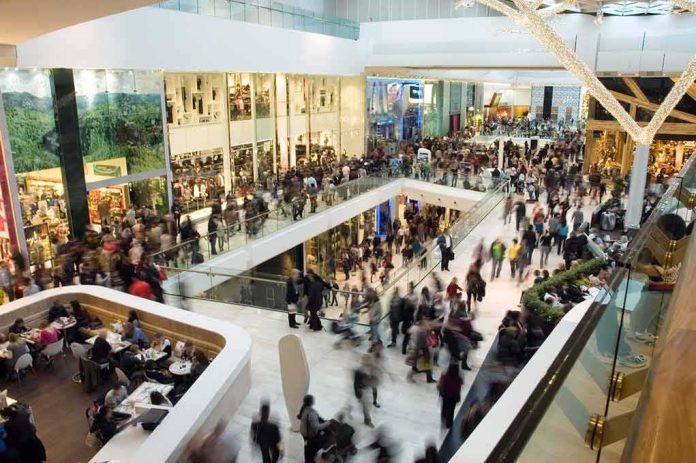
Malls and large-format stores are engineered for foot traffic, not tactical containment. Wide corridors, multiple entrances, and seasonal crowds complicate both response and evacuation. Extended holiday hours—Spirit Halloween’s later schedule contrasted with the mall’s earlier close—can also create pockets of concentrated shoppers at times when ambient security staffing is thinner. That asymmetry matters: the faster officers can establish a clear inner and outer perimeter, the sooner medics can work without cross-traffic from evacuees and bystanders. In Fairfield, witness accounts described quick self-evacuation through service doors and gates—an adaptive behavior that building codes and retail staff training are increasingly designed to support.
Post-incident, property managers typically review camera uptime, sightline obstructions, and emergency egress signage inside tenant spaces. These operational audits, while invisible to the public, are among the most durable outcomes of mall shootings; they tend to produce pragmatic changes—repositioned cameras, revised closing routines, tighter coordination between mall security and anchor tenants—that improve the next response window without transforming the underlying retail environment.
BREAKING NEWS UPDATE: The person killed in a shooting Friday night inside a Spirit Halloween store in Solano Town Center in Fairfield was a 31-year-old pregnant woman, family members said.
Story here: https://t.co/7iPYkYMwPh pic.twitter.com/ufbhHaEdKZ
— ABC7 News (@abc7newsbayarea) October 31, 2026
The Information That Usually Comes Next
In cases like Fairfield’s, the next tranche of public information often arrives through one of four channels. Police may release a suspect description or image once video review yields high-confidence frames. Hospitals, within privacy limits, update the aggregate condition of the injured. The coroner identifies the deceased after family notification. And, if an arrest follows, charging documents, arrest affidavits, or search-warrant returns lay out the investigative narrative—ballistics matches, recovered firearms, clothing traces, and digital breadcrumbing that tie movements to shots fired. Until then, the foundational facts—time, place, casualties, and the scope of the search—anchor the public understanding of the event.
Fairfield fits a familiar but still jarring pattern: a burst of violence in a public space built for everyday life, a clear, police-sourced casualty picture, and a methodical process to determine who pulled the trigger and why. As that process unfolds, the disciplined attention to what is known—and why it is known—remains the firmest ground to stand on.
Sources:
thegatewaypundit.com, abcnews.com, weartv.com, newschannel10.com, nbclosangeles.com, channelstv.com